
When I started smart betting, my first consistently profitable method was matched betting.
Here I answer the most common questions about realistic earnings and what affects them.
Below you can see each matched betting related article on our site. To start this journey of bonus hunting successfully, you need to learn each basic step of the process.
- How much can you make with matched betting? Theory

- Alternatives to matched betting: what to do after being gubbed?

- Tested 7 Matched Betting Sites & Services

- Matched Betting in the USA: How It Works, Upsides & Risks

Important disclaimer:
Matched betting does not guarantee profits on every individual bet, does not totally eliminate risk, and may lead to account limitations, voided bets, or operational losses.
All figures below are illustrative estimates, not promises of results.
Actual outcomes depend on execution quality, bookmaker rules, jurisdiction, timing, and user experience.
Matched betting uses bookmaker promotions and free bets to generate low-variance profit by hedging outcomes.
The core idea is to place a back bet with a bookmaker and a lay bet on an exchange so the two positions offset each other.
Matched betting is often described as “no-risk,” but the realistic framing is that it is low-risk when executed correctly.
The remaining risk typically comes from human error, rule differences, and timing.
1. The basics: back and lay bets
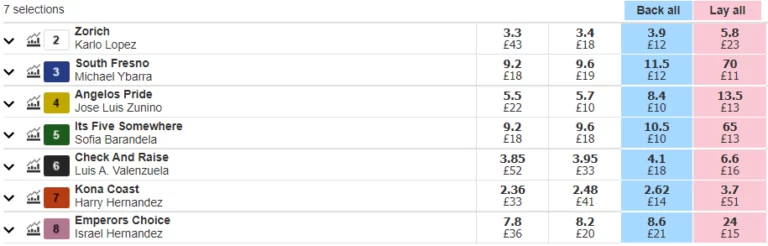
A back bet means betting for a specific outcome, for example: “England will win.”
You win if the outcome happens, and you lose if it does not.
A lay bet means betting against a specific outcome, for example: “England will not win.”
You win if the outcome does not happen, and you lose if it does.
Matched betting combines a back bet at a bookmaker with a lay bet at an exchange to reduce exposure.
The profit comes mainly from the bonus value, not from predicting results.
2. Learn the main types of bonus offers
2.1 Deposit-based bonuses
Deposit bonuses are among the most common promotions offered by bookmakers and casinos.
Casino bonus matched betting is often used as a follow-up step after finishing standard sports welcome offers.
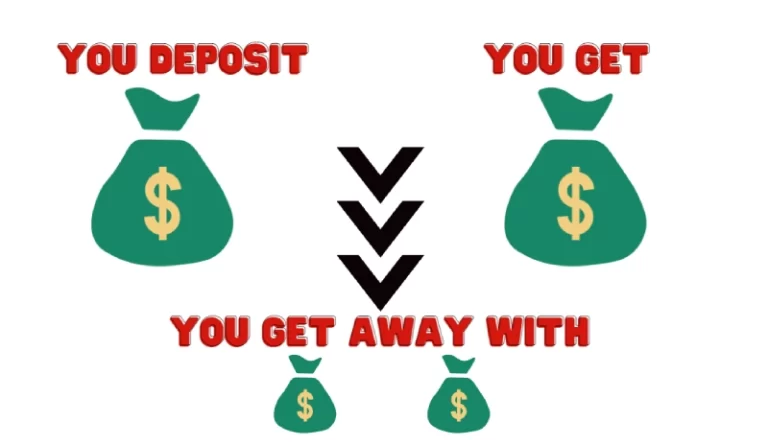
With deposit bonuses, after you deposit a fixed amount, the bookmaker typically matches a portion of it, such as 100% or 50%.
For example, if you deposit €50, you may receive €50 or €25 as bonus value, depending on the bookmaker.
To convert bonus value into withdrawable funds, you usually must complete rollover requirements.
A typical rollover structure can require wagering something like 6× (deposit + bonus), but the exact terms vary.
Matched betting opportunities are often created by pairing the bookmaker bet with a hedge on an exchange.
In practice, you select the back odds at the bookmaker and calculate the required lay stake at the exchange.
2.2 Free bet bonuses
Free bet offers are another extremely common promotion type.
After depositing a certain amount, the bookmaker may offer a “risk-free” first bet up to a maximum stake.
For example, if your first bet is up to €50 and it loses, the bookmaker may return value based on the rules of the offer.
Whether the stake is returned or not matters because it changes the optimal hedging approach.
Stake-not-returned free bets require different calculations than cash bonuses.
To maximize profit from each free bet, you need to follow the correct steps for the specific free-bet type.
2.3 Turnover or cashback-style bonuses
Some offers give a small cashback based on turnover.
Rates can be tiny (for example, 0.05%–0.1%), but high volume can make them meaningful over time.
These bonuses are usually more valuable to bettors who already bet frequently and can scale volume responsibly.
They also require careful checking of exclusions, eligible markets, and settlement rules.
3. Use a payment method that works reliably
You need a bank or payment method that can handle deposits and withdrawals to betting sites.
Some banks restrict gambling-related transactions even if betting is legal in your country or state.
It is possible for a bank to allow deposits but later reverse or block gambling-related withdrawals.
That can become a serious problem after you complete a bonus and want to cash out.
When opening or choosing a bank account for this activity, check that you can deposit and withdraw reliably.
Legal status and banking policy are not always aligned.
4. Register at the bookmaker with the bonus
A practical first step is making a list of every bookmaker available to you.
To understand your matched betting potential, list the bonus types and requirements offered by each one.
This helps you choose bonuses that fit your bankroll and reduce operational mistakes.
If you have more capital available, you can usually start with larger bonuses earlier.
To reduce the cost of mistakes, many bettors start with smaller bonuses such as €10–€20.
If you make an error, the loss is smaller, and mistakes happen even to experienced bettors.
5. Have access to an exchange for lay betting
In matched betting, you typically need both a traditional bookmaker and a betting exchange.
The bookmaker is used for the back bet on an outcome.
The exchange is used for the lay bet against the same outcome.
Using both allows you to cover outcomes and make the approach close to risk-neutral when executed correctly.
Liquidity matters on exchanges because you want your lay bet to match quickly at competitive odds.
A large market makes it easier to get matched without giving up too much value.
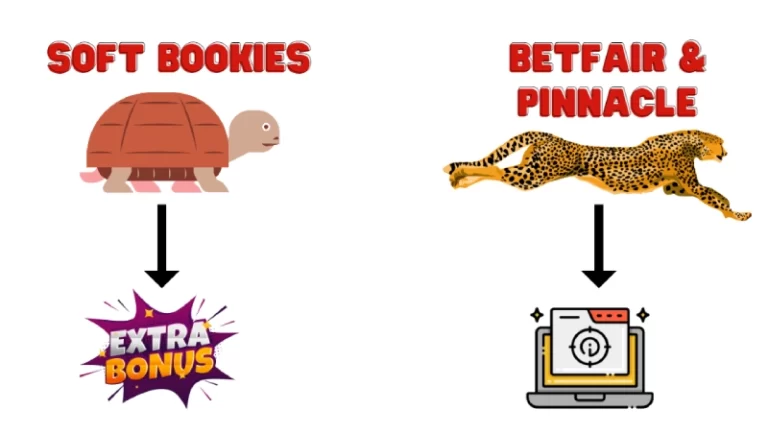
Some traditional bookmakers are also used because they offer competitive odds and higher limits.
In practice, your results depend more on access, rules, and execution than on any single brand.
6. Deposit funds with bankroll discipline
For optimal results, you often want to meet the bonus’s maximum value, but only if your bankroll supports it.
If you cannot fund the full offer safely, it is usually better to pick a smaller bonus rather than forcing oversized stakes.
Matched betting ties up money across two platforms.
You need enough balance on both sides to place the back and lay bets without delay.
7. Use an odds-matching process to find suitable bets
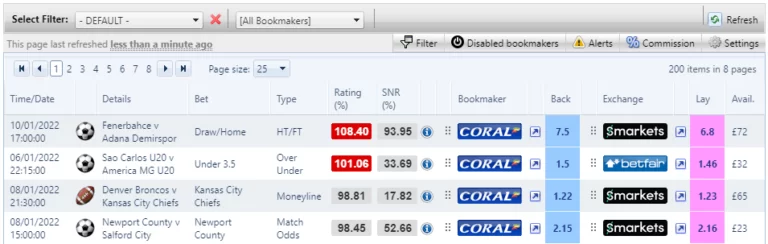
An oddsmatcher helps identify back and lay odds that closely match, which reduces qualifying loss.
Manually searching across many bookmakers and exchanges can become too time-consuming to be efficient.
An oddsmatcher automates scanning and shows potential matches faster.
Speed matters because odds move and mismatches increase cost.
Accurate stake and liability calculations reduce human error.
Oddsmatchers often compute lay stakes, expected profit/loss, and commission assumptions.
Oddsmatchers typically rank opportunities by how closely the bookmaker odds and exchange odds align.
This makes it easier to select bets that produce the smallest qualifying loss.
Many tools also track betting history and profit.
Tracking keeps you organized and helps you avoid repeating mistakes.
Spreadsheets are commonly used for matched betting record-keeping.
The main goal is consistency, auditability, and avoiding calculation errors.
8. Calculate stakes using the correct logic
Different promotion types require different stake calculations.
A free bet, a cash bonus, and a refund-style offer do not hedge the same way.
Using the wrong stake size can turn a low-risk setup into a negative result.
Correct inputs include exchange commission, odds, and the exact bonus terms.
9. Be ready for KYC verification
Before or during withdrawals, bookmakers often require KYC verification.
Common requests include a photo of your ID or driving licence and a utility bill for address verification.
Some bookmakers may also request a bank statement.
In some cases, they may ask for a selfie holding the ID.
Reputable bookmakers usually keep verification reasonable, but you should be prepared to provide documentation.
Delays here are common, so planning for KYC reduces friction.
Arguing with support about verification usually does not help.
More back-and-forth can increase delays and scrutiny.
10. Withdraw sensibly and repeat
Withdrawing immediately after completing an offer can draw attention in some cases.
Many matched bettors prefer partial withdrawals and continued normal activity to reduce obvious “bonus-only” patterns.
The long-term goal is account longevity, not just one bonus conversion.
A stable workflow often beats aggressive short-term optimization.
Tips for successful matched betting
If you want to reduce the chance of limitations, avoid placing qualifying bets that show obvious profit on paper.
Many bettors prefer near-zero or slightly negative qualifying returns because it looks more like normal customer behavior.
Using the right exchange and sharper hedging options can influence both your profitability and longevity.
Better hedging reduces cost, and better counterparties can reduce operational issues.
Negative or near-zero qualifying bets usually reduce immediate winnings.
The trade-off is that it can help keep accounts active longer and preserve future promotions.
Large stakes too early can trigger scrutiny.
Matched betting tends to reward patience and consistency more than aggression.
What are the risks of matched betting?
Matched betting is one of the safest structured betting methods, but it still has risks.
Most risks come from terms, execution, and operational constraints rather than sporting outcomes.
1. Hard-to-complete bonus requirements
Some offers look attractive but require high rollover volume.
If rollover is extreme, the bonus may not be worth the time, capital tie-up, or restriction risk.
A rollover like 20× deposit and 20× bonus can make an offer inefficient.
Reading the terms is part of profit protection.
2. Matched betting at bookmakers with very bad odds
Matched betting needs workable odds at the bookmaker with the bonus.
If the bookmaker margin is high, the odds can be too low, increasing qualifying loss and slowing progress.
With poor odds, you will see fewer good matches and spend more time for the same profit.
In some cases, you may need to accept losses to complete wagering.
3. Covering the bets on the wrong markets
Hedging errors are one of the biggest real risks.
These mistakes often happen when odds are moving and the bettor rushes.
Example: you place an “over” bet on the home team market and hedge incorrectly on a different market.
Or you accidentally place another bet in the same direction instead of hedging, creating double exposure.
It is possible for both legs to win with luck, but it is also possible to lose both legs and take a substantial hit.
Over the long run, profits can still outweigh occasional mistakes, but mistakes reduce ROI.
You can reduce errors by betting pre-match, using larger leagues, and not rushing.
Taking time to double-check market, odds, and stakes is one of the best protections.
4. Not being able to cover the bet with the right stake
Sometimes you place the back bet and then discover the hedge side will not accept the needed stake.
A message like “maximum stake is lower than yours” can force partial hedging.
Keeping funds across multiple platforms helps you hedge quickly elsewhere.
If you do this long enough, you will eventually face stake limits somewhere.
5. Depositing to a bookmaker with a bad reputation
A good bonus is not worth it if the bookmaker is unreliable.
Some operators create friction when a player starts winning or shows smart betting behavior.
Basic due diligence includes reading forum reports and checking patterns of withdrawal issues.
Some bookmakers allow withdrawal of the initial deposit only, while others may lock funds and stop responding.
If a bookmaker has consistent reports of account closures without clear reasons, it is safer to avoid them.
Risk management includes operator selection, not just bet selection.
Is matched betting worth it?
For beginners, matched betting can be one of the easiest and most structured ways to learn smart betting.
It can be worth doing if you are eligible, of age, and can follow rules precisely.
The key requirement is discipline and correct execution.
Prior sports knowledge helps, but the process can be learned with careful practice.
Matched betting can work even if you already have accounts, but offer availability may differ.
Many bookmakers still use bonuses to acquire customers, but terms and generosity vary.
Matched betting can be a viable side hustle because it is process-based and can be done from home.
Compared to low-paying microtask methods, the hourly return can be higher when executed efficiently.
Some bettors start with as little as $100–$150, but progress can be slower and more fragile.
Many experienced bettors prefer €200–€300 as a more comfortable minimum.
Many matched bettors rely heavily on exchanges, but alternative hedging setups exist in some markets.
The optimal approach depends on what is available in your country.
Exploring additional strategies can help after bonuses decline.
Arbitrage and value betting are commonly studied next because they extend opportunity beyond promotions.
Matched betting tips and strategy
Most welcome bonuses come with rollover requirements.
If your bankroll is limited, these bonuses can still help you build capital if you execute correctly.
One approach to completing rollover efficiently is using very low-margin bets that meet the odds requirements.
Some bettors choose two bookmakers that both have bonuses and use hedged bets that contribute to both rollover targets.
Avoid abusing bonuses with large stakes or very obvious profitable arbs.
If you get limited before finishing rollover, you can be stuck with unusable requirements, such as extremely low max stakes.
1. Start with smaller bonuses
If you have limited capital, start with smaller free bets like €5–€10–€20.
With a bankroll around €100–€150, many bettors focus on small offers first.
With €200–€300, you can often handle €30–€50 bonuses, but still keep stakes conservative.
The goal is avoiding a situation where your funds are trapped at one bookmaker.
2. Place matched bets with low profit %
A key longevity goal is staying under the radar.
High visible profit patterns can make an account easier to flag.
Close-to-zero or slightly negative qualifying bets often reduce attention.
They also reduce risk of getting limited before completing rollover.
3. Place more bets after completing requirements
A common rookie mistake is withdrawing immediately after finishing rollover.
Bookmakers often notice customers who only deposit, complete a bonus, and withdraw.
Placing additional normal-looking bets can help keep the account active.
Some bettors aim for 5–10 extra bets to reduce “bonus-only” signals.
Immediate withdrawals can also trigger stricter verification.
That can slow down your cash flow and create operational friction.
4. How much money do you need to start matched betting?
A practical minimum many bettors use is around €200–€300.
More starting capital usually means faster progress because you can run more offers in parallel.
Starting with €100–€150 can still work, but it increases the chance you need to top up one side of the hedge.
Example: if the bookmaker side wins and the exchange side gets drained, you may need more funds to keep completing rollover.
Matched bets have two legs and can shift balances between platforms.
You cannot guarantee that all funds stay on the same side during rollover.
A common comfort rule is having several times the size of the bonus you are targeting available.
More bankroll reduces the chance you get stuck mid-process.